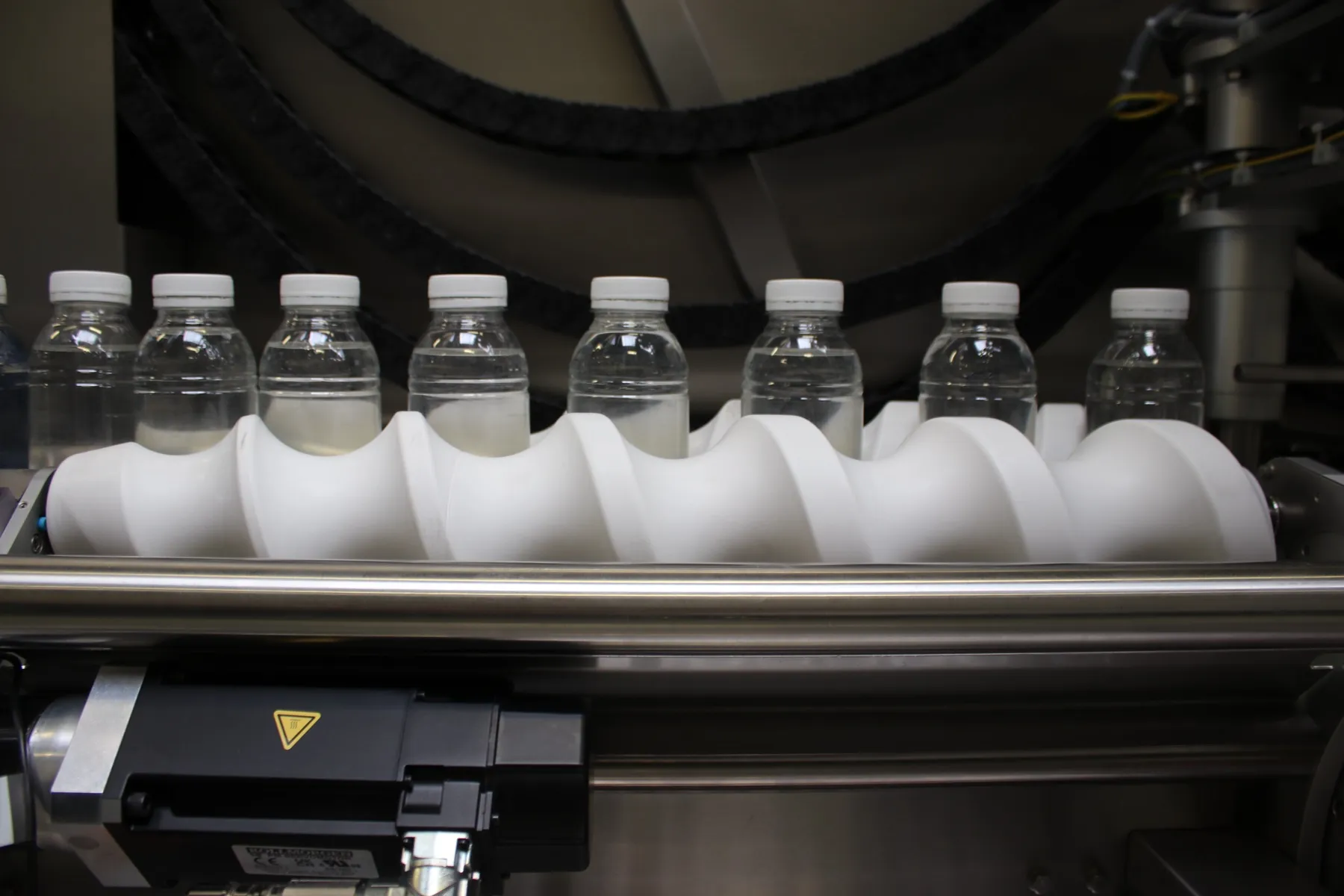
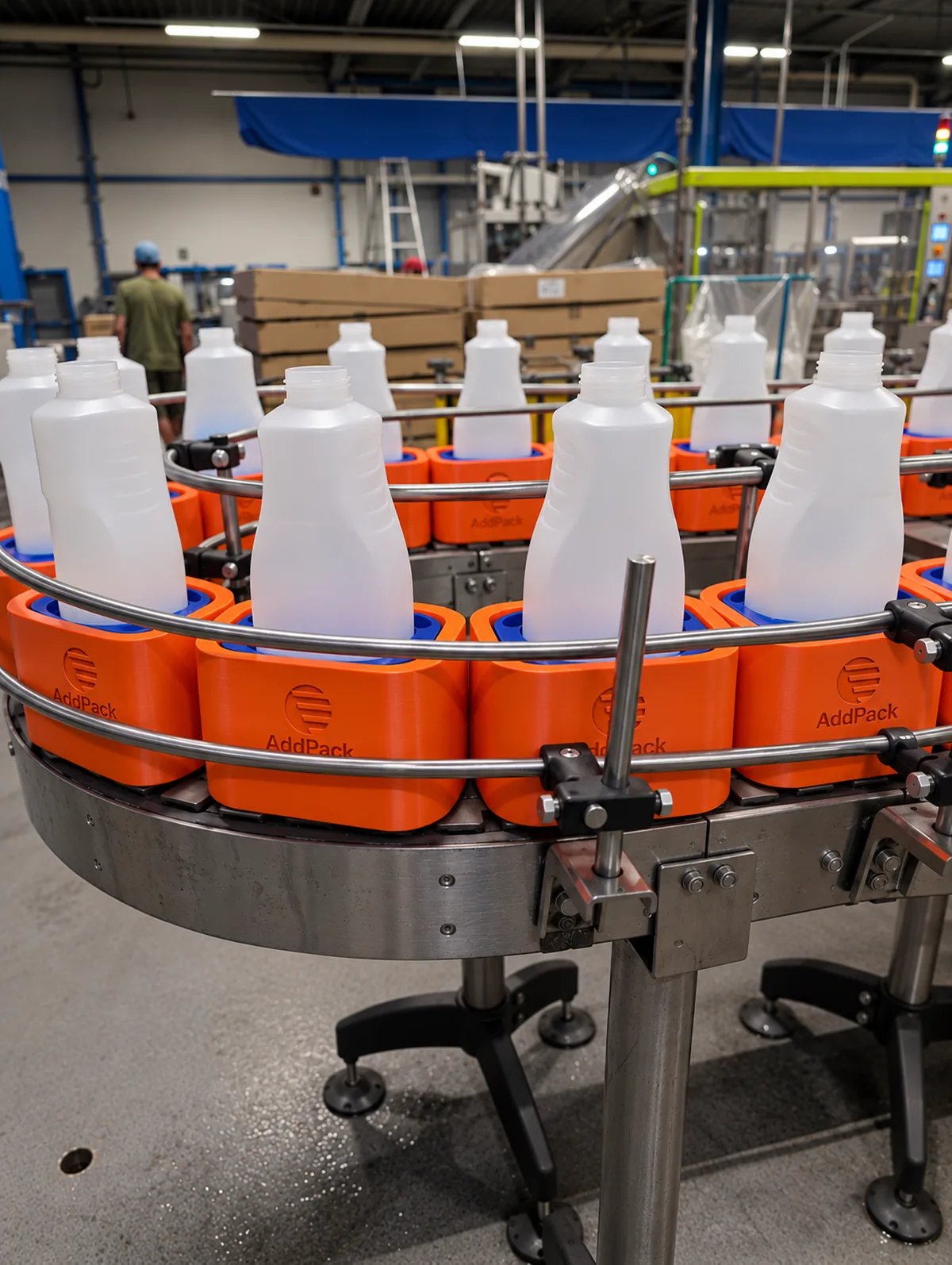
A new bottle shape does not always need a completely new carrier. Where the machine interface and available space allow it, a reusable outer puck can carry different inserts, each shaped for a particular bottle.
The useful question is: which parts of the carrier need to change with the bottle, and which can stay the same?
Separate the two jobs of a puck
A puck connects a container to the handling system around it. Its outside must suit the conveyor, guides and transfer points. Its inside supports and locates the bottle.
In a one-piece design, those two jobs sit in the same component. In a modular design, the outer body provides the machine interface and a replaceable insert supports the bottle. A format change can then involve changing the insert while keeping a suitable outer body.
That can mean fewer complete pucks to buy and store. It depends on the bottle formats sharing an outer interface that works for the line.
Start with the bottle and the space around it
The bottle needs to fit inside the carrier, but that is only part of the brief. Think about how it enters, where it needs support and how it leaves at the next station.
AddPack designs pucks around the available machine space. Slim, strong walls can leave more room for the bottle and insert within a given outer size. The support geometry is then matched to the container rather than treating every bottle as a simple cylinder.
This is relevant to unusual or unstable containers, including shaped cosmetic and personal-care packaging. The final design still needs to suit the particular bottle and operating conditions.
Check the whole handling path
A shared outer puck is useful only if it works throughout the required path. Before selecting a modular arrangement, review:
- Outer dimensions: the width, height and depth available on the existing line.
- Transfer points: where the puck moves between conveyors, guides or stations.
- Loading and unloading: how the bottle goes into the support and is released.
- Container variations: which bottle formats are intended to share the outer body.
- Fit and tolerances: the dimensions that need to be agreed before manufacture.
A one-piece carrier may still be the appropriate choice. The objective is a workable format system for your machine.
Bring the existing interface into the brief
Useful starting information includes an existing puck, its dimensions, bottle samples or drawings, and photographs of the relevant line interfaces. If you have several formats in mind, show them together so the shared-carrier idea can be evaluated as a system.
AddPack can develop a new carrier, an outer body with inserts, or a replacement based on an existing component. Geometry, tolerances and fit are agreed before production.
Explore the available puck configurations, or discuss your next bottle format.