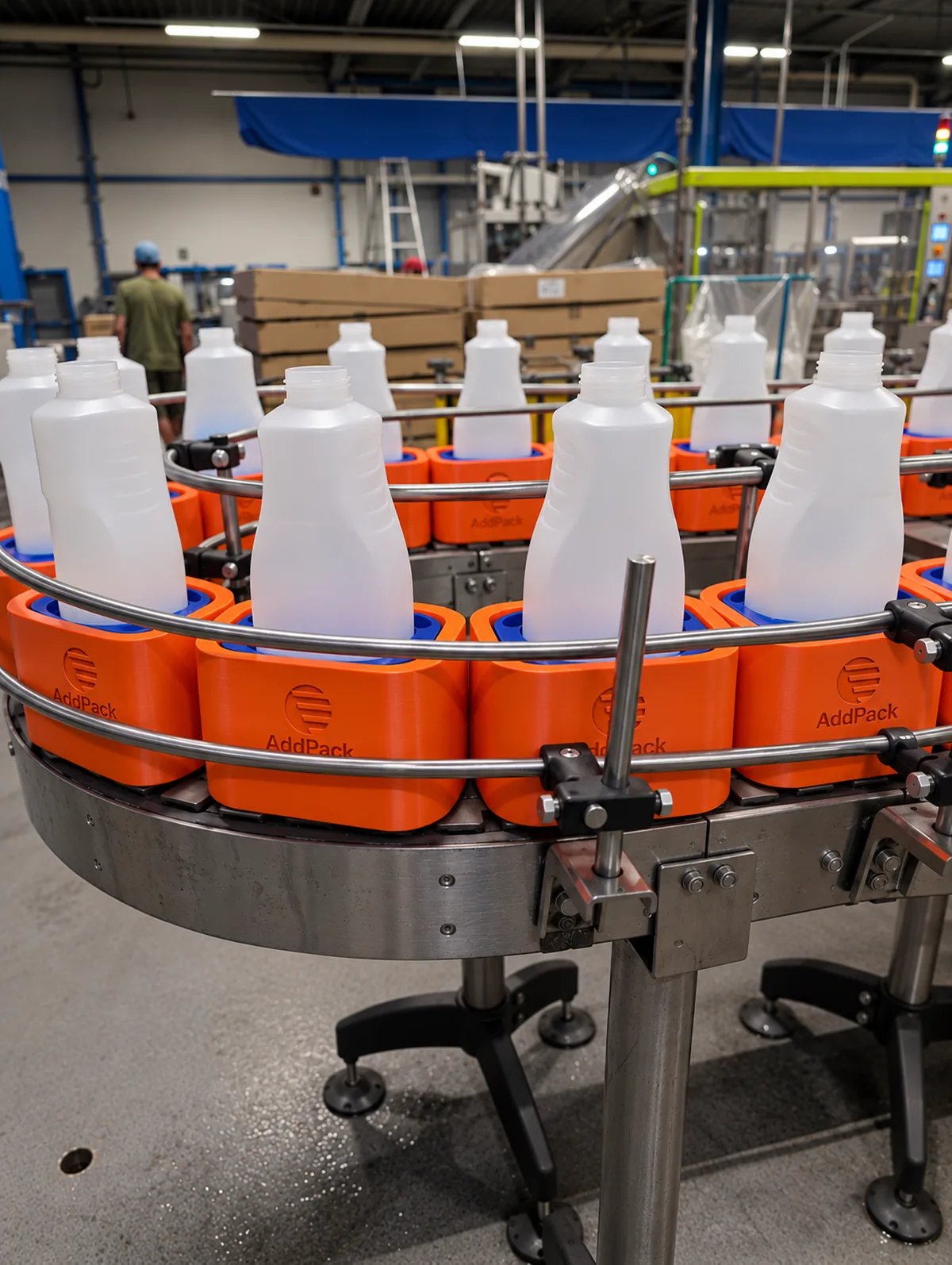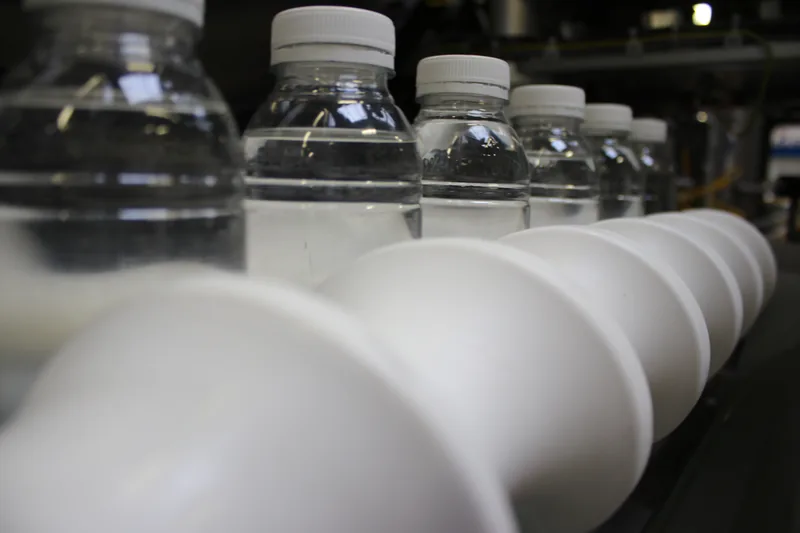
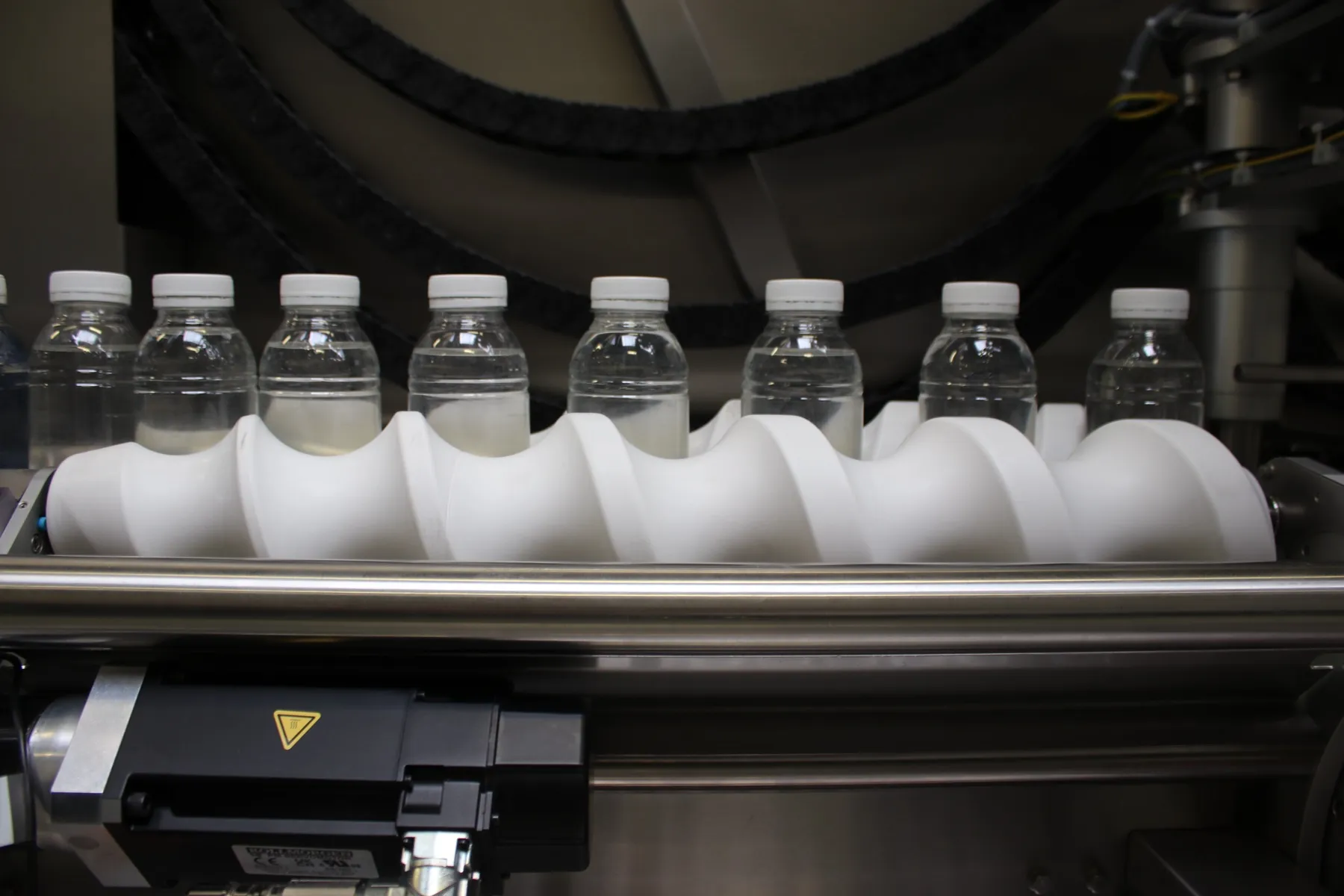
A timing screw is part of a handling system. The container, guides, transfer points and machine interface all influence what the screw must do.
When starting a replacement or a new format, describe the required container movement first. That gives the design a clear purpose and makes the important interfaces easier to identify.
Define the movement before the profile
Common timing screw applications include creating controlled spacing, changing the interval between containers, transferring products between stages, and presenting suitable containers in a particular orientation.
The starting conditions matter as much as the desired result. Show where the container comes from, how it is supported and where it needs to arrive. An existing component, a drawing or photographs of the arrangement can help explain these relationships.
For a new bottle format, include the bottle information alongside the machine information. A screw designed around one container should not be assumed suitable for another simply because their overall size looks similar.
Understand constant and variable pitch
A constant-pitch screw is associated with a consistent feed interval. A variable-pitch profile is used where the spacing or motion needs a tailored transition.
Those labels describe a design approach; they do not specify a complete screw. The actual profile still has to work with the container geometry, transfer conditions and machine interface.
AddPack evaluates those inputs together. The aim may be to reproduce an established component or to develop a different profile around a new handling requirement.
Consider the complete arrangement
Some applications use one screw with the surrounding guides. Others use paired, synchronised screws to control and guide the container.
Longer or machine-specific installations may also call for a segmented screw assembly. These are choices to make around the application, available space and connection details.
When describing the arrangement, include:
- The screw length and available space.
- The container shape and relevant dimensions.
- The existing screw or machine interface information.
- The required spacing, transfer or orientation task.
- Any guides, paired screws or neighbouring components that affect the motion.
Replacement or new-format development?
For a replacement, a physical component, scan, drawing or approved specification can provide the starting point. Make clear whether the intention is to reproduce the existing result or address a particular handling issue.
For a new format, explain what changes at the container and what remains fixed at the machine. AddPack can evaluate the geometry rather than assuming a direct copy is the right answer.
Once a design is validated, its digital specification can be retained for repeat production. Keeping the agreed version identifiable helps later orders refer to the same component definition.
See AddPack timing screw configurations, or send the details of your application.